Secret no.20 Chocolate

Blogger Penny Walford recently wrote a touching piece about her great aunt Marie, who had died aged 106. Marie sounds a remarkable woman, who travelled the world in her youth by hitching rides on cargo ships. Penny first met her later in life, when she would follow her favourite ice hockey team, the Ottowa Senators on TV and, when her eyesight failed, on the radio.

Penny describes how Marie was a strong and active woman who swam every day when she was younger and walked every day as she got older. Even at 106 she was still taking a turn around her nursing home. So surely this explains her long life?

663196031_86e3acb4f4

Well not according to Marie. She and Penny had a shared love – chocolate. And it is to this that Marie gave credit for her long life. Penny describes how Marie ate it every day, with half-hidden stashes of it near her bed and usually a couple of bar wrappers in or around the wastepaper bin. (In the interests of accuracy, I should also say that Penny thinks Marie’s love of chatting and storytelling also helped her live longer and we’ll return to this theme in a later post).

So is this possible? Could Cadbury and Hershey be manufacturing the key to a longer life?

Plausibility rating: 5 out of 10. While at first the idea of chocolate as a superfood seems outlandish, it turns out Marie is not the only centenarian to give it credence. Bernard LaPallo is 110 and he too says, chocolate (along with four other ‘superfoods’) is the reason while 105-year-old Edna Sandys also thought it had played a part. And perhaps we were wrong to focus on the two raw eggs that Emma Morano eats (No. 12 of our 101 ways) and should instead have followed the evidence of the chocolate that goes missing in the night.

So what about the science part? Well, there is some reported evidence to support chocolate’s credentials. It is high in polyphenols, which may protect against heart disease (along with lots of other, healthier-sounding, foods like blueberries, cereal bran and green tea). It may also help lower blood pressure and some studies suggest a reduction in heart attack, stroke and diabetes. Certainly the internet is full of articles with titles like ‘the 9 health benefits of chocolate’ and ‘7 reasons why chocolate is healthy’.

However, on closer examination the benefits of chocolate do tend to dissolve, a little like cocoa powder in hot milk. Many of the studies are small and still need confirmation. And they tend to focus on either cocoa or strong dark chocolate, not the mass-produced stuff that most of us eat and which is made up mainly of milk fat and sugar. Alison Hornby of the British Dietetic Association brings us down to earth: “Chocolate is an energy-dense food that could contribute to weight gain and a higher risk of disease. As an occasional treat, chocolate can be part of a healthy diet. Eaten too frequently, it is an unhealthy choice.”

I fear this is good, sensible advice  – even if Marie, Bernard, Edna and Emma were all able to ignore it and still make their way to 100. Kit Kat, anyone?

photo credit: Geknöppel via photopin (license)

Secret no.18 Monogamy

Linah Mmola was born in Limpopo and apparently turned 117 years old recently in Tembisa, South Africa. I say ‘apparently’ because there is some debate about Linah’s birthday: her family believe it was January 2nd 1898 but there are (perhaps understandably) no documents to prove it. Whether Linah is 117 or a little younger, though, there is little reason to doubt she’s lived a very long life. Her secret? Well, she told the local Eyewitness News that her longevity was down to ‘staying true to one good man for many years‘, as well as a diet of spinach and corn meal porridge.

8429981827_c2cc1ea0a2

At least we think she did’: it’s not clear from the reports whether Linah gave this reason or one of her family.

But let’s assume she did say it: could it be true?

Plausibility rating: 5 out of 10We know (see Ways to Live to 100 no. 12) that loneliness and isolation can be bad for us but it’s a big stretch from there to concluding that monogamy is good for us. There is some academic research to suggest that marriage might be beneficial. One 1995 US study called, perhaps inevitably, ‘Til death do us part‘ found that married people had longer lives than single people. However that in itself does not mean that monogamy leads to a longer life. For one thing, married people are not necessarily monogamous, as the data leak from the AshleyMadison website this month reminds us. Nor can marital status at time of death – which many of the studies use – distinguish between lifelong pairings and deathbed dalliances. Finally, it’s also possible that those in good health are more likely to get married in the first place, rather than it being wedlock that leads to healthiness. There is an entertaining run-through of other possible health benefits of marriage here. However when a link about married women takes us not to an academic text but at a Beyonce video we know that we are on shaky ground.

For the opposition, one lovely  piece of research by the University of Sheffield bangs the drum for polygamy. It found that men aged 60+ from countries that practice polygamy lived on average 12% longer than men from mostly monogamous nations. ‘Want to live longer? Get a second wife’ said the New Scientist while the Daily Mail found an expert to say that men in polygamous marriages ‘benefit from having a fuss made over them by a gaggle of women’ as well as being better cared for into old age.

While that may not be conclusive proof (not least because it tells us nothing about the longevity of women in polygamous marriages – or the longevity of men and women in polyandrous marriages, for that matter) it is enough to conclude that the case for monogamy and long life is, at best, not proved.

photo credit: Wedding rings via photopin (license)

Secret no.17 Guinness

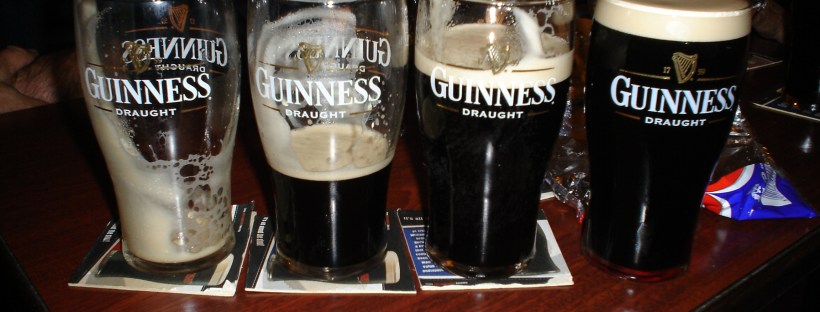
Gladys Fielden has been drinking a bottle of Guinness every morning at 10.30 and reckons it’s the key to her having reached 100. She told the Daily Express: ‘They say it’s good for you and it’s certainly done something for me‘.

3820217887_a430856208_m

Gladys started drinking Guinness when she was pregnant with daughter Linda. She now has two grandchildren and three great-grandchildren. One of the grandchildren, Michelle Clews, says: ‘I’ve always known her to drink it. She’s always believed it’s what keeps her healthy. Gladys is very stubborn in her ways and she’s got to have her Guinness. If anyone in the family is ever ill she tells them to get a Guinness down them.’

Whether it’s the Guinness or not, Gladys is not just long-lived but has also stayed healthy and active. She only gave up baking when she was 90. Says Michelle: ‘She’s a remarkable woman and very good for her age. I think we all hope we can be like Gladys if we get to her age.”

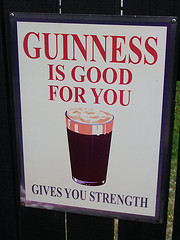
Plausibility rating: 5 out of 10Guinness had stopped using it’s famous slogan in Britain by the 1980s (though it continued in use in Africa and some other countries until the 1990s when – with a nudge and a wink to the belief that it was good for the libido – it was replaced with ‘Guinness: the power’). Whether because of the slogan or not, belief that it was in some way medicinal and – in particular – was a good source of iron has prevailed: a free pint of Guinness after donating blood was only ended in Ireland in 2010. We’ve already seen (Ways to live to 100, number 2) that alcohol in moderation is generally associated with longer life (albeit with some reservations) – but is Guinness any better for you than other alcohol? Well, just possibly. Researchers at the University of Wisconsin found that dogs given Guinness had less blood clotting than those who drank lager – an effect similar to aspirin. It is also surprisingly low in calories compared to most other beers. On the other hand, it’s not a good source of iron: you’d need to drink 15 pints of Guinness (definitely not good for longevity) to get the same amount of iron as there are in two Weetabix. And – sorry Gladys – not many doctors would recommend drinking in pregnancy these days. So, all in all, Guinness is probably good for longevity in moderation – but no more than other alcohol. That’s not much of an advertising slogan though, is it?

photo credit: Old Advertisements via photopin (license)

Secret no.16 A good doctor

3373106750_2ddd4772d9Centenarian Lilian Grundy doesn’t think she’s particularly old – she has an older sister-in-law in Australia who’s 104 and a younger sister who’s also still going strong.

Her life has taken in running a fish and chip shop, being a Citizen Advice Bureau adviser and – during the war – seeing a doodlebug hit her home town, Oldham. Her husband, Harry, died in 1970 and Lilian has no children.

The key to her longevity, she thinks, is being able to follow good medical advice: “I must have a good doctor. I think my secret really must be that I do what I’m told. If the doctor tells me to do something, I do it.”

So, is she right about her doctor being the key to her long life?

Plausibility rating: 7 out of 10. At first it seems obvious that medical care has played the most significant role in increasing life expectancy but in fact it’s a surprisingly contentious claim. Some historians argue that it is public health issues – clean water, better housing, the decline of smoking, safer food, workplaces and homes – that have played the larger role. Certainly life expectancy grew rapidly in the 19th century, ahead of the great medical advances of the 20th century such as antibiotics. And there were marked falls in life expectancy, particularly for men, from 1914-1919 and 1939-1945 so clearly non-medical factors have played a role too (think of that doodlebug from Lilian’s life history). In fact, one thorough study of the subject credited medical care with just 50% of the increase in life expectancy since 1950.

But what we’re interested in is the growth in the number of the oldest old and especially those who reach 100. Surely the main reason for the increase in centenarians is our ability to keep alive for longer people with multiple long-term conditions? Well, yes and no. A major study of Okinawans, who have more than twice the rate of centenarians of the US population, cites a range of factors that includes public health infrastructure, housing, income, and nutrition as well as access to better medical care.

So it looks as though Lilian’s longevity secret is part of the answer but not the whole answer.

photo credit: <a href=”http://www.flickr.com/photos/8404611@N06/3373106750″>Nurse</a&gt; via <a href=”http://photopin.com”>photopin</a&gt; <a href=”https://creativecommons.org/licenses/by/2.0/”>(license)</a&gt;

Secret no.15 Water from a wishing well

3304915442_aa97907234_o100-year-old Thelma Arnold isn’t sure why she’s lived so long but she has a suspicion: she once visited a wishing well in Fort Lauderdale and drank two scoops of water. ‘I didn’t think it did anything, but here I am,’ she told her local newspaper. ‘For some reason, I’m still here’.

Tragically, though, this isn’t Thelma’s only brush with the supernatural. She recalls seeing her parents with her two-year-old brother and thinking: ‘I’ll never see him again’. He drowned the same day.

Thelma’s mother moved in with her for a while before passing away at the age of 83 and today her grandson lives with her. He is one of five grandchildren, five great-grandchildren and five great-great-grandchildren.

Thelma worked as a waitress and a shop assistant, walking to work for years until she passing her driving test at the age of 60.  She thought she’d failed: ‘I was riding along nice when the man said make a right turn and I made the prettiest left turn you’d ever seen. I pleaded poverty and he passed me.’

At 100, she remains mentally alert, reading the newspaper every day and still enjoying watching the TV (recalling that her father regarded the TV as ‘evil’).

Plausibility rating: 1 out of 10. There really is nothing remotely scientific that could support Thelma’s theory. To be fair, that’s as much as there is for homeopathy, which nonetheless supports a multi-million pound industry. But if we’re going to follow the evidence we have to mark this all the way down to one.

Secret no.13 Bacon

1444659348_d8f95a9ccaWe’ve met the remarkable Susannah Mushatt Jones before, when she was quoted as saying that ‘sleep’ was the key to her longevity. But as she turned 116 on July 7th, and remained the world’s oldest woman, she apparently told a reporter that there was another factor: bacon.

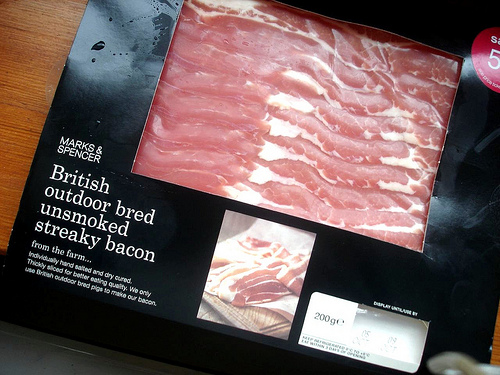
Every morning, it’s reported, she has four rashers of bacon with eggs and a sign in her kitchen says: “Bacon makes everything better.”

So –  assuming she really did say it – is that the secret of a life that started in Alabama as one of 12 children picking crops, before moving to New York as a nanny?

Plausibility rating: 2 out of 10. Let’s be honest, bacon really is not the key. In fact there’s research to suggest that processed meats like bacon are actually a risk factor for longer life, not a likely way of achieving it. Most recently the World Health Organisation advised that 50g of processed meat daily was enough to increase the risk of colorectal cancer by 18 percent. That’s half of what Susannah’s been eating every day.

All in all, if you want to take Susannah’s advise her original ‘secret’ – sleep – is probably a better bet.

photo credit: latest bacon breakfast via photopin All rights reserved by the author

Secret no.12 A loving family’

Nazar Singh, who died last month in India where he was visiting family, was believed to be Europe’s oldest man. He was though to be 111, though he had no birth certificate.

He told media after his 110th birthday that his longevity was due to good food, good family and happiness. However his fondness for a tot of whisky every night – and perhaps the fact that he was pictured on his birthday with a pint of lager and a whisky chaser – led understandably to the whisky also being cited (we’ve covered whisky in another post).

Nazar was born in the Punjab, India. He navigated two world wars and the independence and partition of India before moving to the UK in 1965. He worked in a foundry in the West Midlands and then moved to Sunderland on retirement. He returned to India in January this year and was being cared for by his two eldest sons.

Plausibility rating: 8 out of 10. We don’t know exactly what food Nazar ate (though we know he drank milk and almond oil}. There is evidence about the beneficial effect of alcohol in moderation but also some that questions it. And he is surely right to emphasise the importance of a loving family to longevity: the absence of strong relationships – whether family or friends – is linked to early death. One study, cited by the Campaign to End Loneliness, says it is the equivalent of smoking 15 cigarettes a day. Nazar believed that ‘family need to look after elders’, a view that would be popular with the Health Secretary, Jeremy Hunt, who recently worried in public about the number of ‘lonely funerals’. The latter need not have concerned Nazar: he had 34 grandchildren and 63 great-grandchildren.

Secret no.11 One meal a day

41415099_e3de17b2ac_oDespite reaching 100 on June 22nd, Mary Williams has the enviable record of only having been to hospital once (after a fall on a bus when she was 94).

Mary lives alone in supported housing but her family flew in from as far away as Australia to celebrate her 100th birthday. She had what sounds like quite a tough live to begin with – born into a workhouse in County Galway, Ireland, and then raised by nuns until she was 16.

Despite this, she’s managed to get to 100. How? She partly puts this remarkable record down to her regime of drinking a pint of warm water, once in the morning and once in the evening. But Mary also says she has another secret, one that might have a bit more going for it: her habit of only eating one meal a day.

Could that really be a factor?

Plausibility rating: 6 out of 10. Keeping hydrated is important but probably not the key to longevity. More possible is the habit of eating just one meal a day: calorie restriction has been shown to increase longevity in mice and other animals, and a serious study on humans – Calerie – is underway. It involves eating 25% less calories, while maintaining adequate nutrition. There’s even a society dedicated to putting it into practice – CR Society International. It says its website is ‘the most important you’ll ever visit’, which is quite some claim.

It may not work of course but as that old joke goes: ‘It’ll probably feel like it’.

photo credit: lunch via photopin (license)

Secret no.10 Two raw eggs

3870440483_edab3789d8_oEmma Morano is a remarkable 115 years old and lives, alone, in Verbania, northwest Italy. Emma has lived by herself since she left her husband in 1938 because of domestic abuse. Her niece comes by twice a day.

After what is described as a ‘sickly’ childhood, her doctor recommended she eat two raw eggs a day, a regime she’s stuck to ever since. She added the 150 grams of steak after about of anemia. Unusually, she eats little fruit or vegetables which leads her current doctor, Carlo Bava, to observe: “Emma sees to go against everything that could be considered the guidelines for correct nutrition… But she’s gotten this far.”

Another unusual element to her diet is the biscuits and chocolates that her niece leaves out every night and which, by the morning, are always gone. Not bad for a woman whose movements are now limited, whose eyesight is bad and hearing weak.

This nocturnal roaming may be one illustration of Emma’s positive outlook on live, a factor that Dr Bava believes has contributed to her longevity. Indeed when a journalist visited her she burst out into verses of a 1930s Italian love song, lamenting only at the end: “Ahh, I don’t have my voice anymore”.

Dr Bava also believes that genes have played a role in Emma’s longevity, a theory supported by the fact that Emma’s sister lived until 97.

We’ll save our discussion of genes and a positive outlook for another day. And we’ve covered chocolate here. But what about the eggs? Could they have had an effect?

Plausibility rating: 4 out of 10.  Eggs have had a chequered history when it comes to health advice. On the one hand, as EggInfo (the website of the British Egg Information Service) tell us, they are full of nutrients: protein, vitamins D, A, B2, B12, folate and iodine. On the other, for many years we were advised to limit intake to two a week because of fears about cholesterol and heart disease. On that basis, Emma would have been virtually killing herself for nearly a century.

Now however there is no suggested limit on the number of eggs you eat and heart disease is blamed much more on saturated fat than on cholesterol. However before you decide to go out and buy some hens, there are a couple of good reasons for thinking that eggs might not be such an aid to longevity.

There is limited research on eggs and longevity but the main piece isn’t positive. A long-term study of Harvard physicians found that eating up to six eggs a week was fine but more than that increased the risk of death by nearly a quarter.

And In the UK the elderly are still advised to avoid raw or runny eggs because of the risk of salmonella (in truth the risk is minimal if you stick to pasteurised eggs).

On the whole then, while the health concerns about eggs have declined, there’s little to suggest that they are a secret aid to longevity, and too many of them might perhaps have the opposite effect.

All in all, given that we’ve already said bacon isn’t the secret of a long life either, that’s most of the great British breakfast ruled out. Porridge anyone?

photo credit: two eggs via photopin (license)

Secret no.9 Hard work

You’ve got to like Vera Walsh. Asked what it felt like to be 100 she responded: ‘The same as it did to be 99’. Next question please.

A similar pragmatism is expressed in her ‘secret’ of living a long time: ‘Hard work and having fun. Lots of times you have to make your own fun – that’s the way to go’.

We have plenty of examples of Vera’s hard work – her jobs included long spells in retail – and also of having fun: she was an avid sportsman, taking part in track and field, curling and bowls. ‘I was always involved in sports and I’d advise people to do that and to coach and keep an eye on those people who are learning’.

Vera hit 100 on June 20th in Edson, Canada. She has a little extra advice for would-be centenarians: ‘Be happy. Laugh and the world laughs with you – cry and you cry alone’.

Plausibility rating: 6 out of 10. A famous Stanford Longevity study found that those who were most committed and involved in their jobs lived longer. But a caution here (and the clue is in the title of the study): it followed 1,500 bright, middle-class American kids who tended to go on to be lawyers, doctors and, yes, university professors. Low paid, dull, repetitive or dangerous (self-evidently) work, might not have the same effect. We’ll explore that in more detail later.