Secret no.34 Optimism

17611776216_1183fb5a65_oAlice Herz-Sommer led a remarkable and, at times, tragic life. Born to a Jewish family in Prague before the second world war, she was a gifted musician and mixed with talents like Gustav Mahler and Franz Kafka. Following the German invasion of Czechoslovakia, however, she was interned in a concentration camp (where, incredibly, she was able to play in over 150 musical concerts). She survived, along with her son, but her husband and other family members did not. After the war she became a renowned concert pianist and died in 2014 at the age of 110.

The key to her long life, she said, was optimism. “I have lived through many wars and have lost everything many times Yet, life is beautiful, and I have so much to learn and enjoy. I have no space nor time for pessimism and hate.”

On the face of it, Alice’s extraordinary life has little in common with that of Cloe Wintle, other than that she is also a centenarian. Born with sight problems, Cloe has lived in the south west of England all her life and had a long marriage to her late husband, Albert, who ran a shoe shop. Yet Cloe share’s the belief that a positive outlook on life is key to her longevity.

“I never thought I would reach this age but I have. I have had good friends and family around me who have helped through the difficult times but I have lived well. There have been bad times but what’s the good of moping around. You just have to get on with life and fight through the difficulties.”

Similarly William Delgesso, 100 in 2014. Born in Atlantic City, he worked for the New Jersey Bell telephone company for 32 years and was married to his wife Mary for 74. He turned 100 in 2014 and has had a lifelong love of dancing. His local newspaper wrote that if positive attitude alone could keep someone alive, Delgesso would live to be 200. “I feel great,” he told the paper. “Any better I couldn’t stand it. I just don’t feel old. I eat what I want. I drink what I want. Activities, I go to them. I even do some dancing at the senior center.”

Whether we call it optimism or positive attitude (or a range of other terms that psychologists link together, as we’ll see below), there is a widespread belief that many centenarians possess it. In fact one poll of centenarians found that 60 percent described themselves as ‘positive people’.

But are positive people more likely to get to 100? Or are they simply more positive because they have done?

Plausibility rating: 8 out of 10. Yes, shout it out loud – being positive can improve your physical health and may help you live longer.

This major study in 2008 looked at results from 35 research projects and concluded that people with ‘positive psychological well-being’ do indeed have better health. It defined positive psychological mood very widely to include emotional well-being, positive mood, joy, happiness, vigor and energy and also dispositions such as life satisfaction, hopefulness, sense of humor and – yes – optimism.

Another big study –  this one looking just at optimism – considered 83 studies (with just a hint of ‘my meta-analysis is bigger than your meta-analysis’) and concluded that being optimistic is good for you across pretty much all health conditions.

Both studies also concluded that even people who were already unwell gained from being positive and optimistic. That lends weight to the idea that our centenarians were positive people to begin with, not just because they’d already made it to 100.

And this study  makes the link to longer life. It looked at four characteristics of ‘positive attitude to life’ – optimism, easygoing, laughter, and introversion/outgoing- and concluded that these personality traits might well ‘play an important role in achieving positive health outcomes and exceptional longevity’.

So we’re leaning towards benefits of thinking that the glass is half full rather than half empty. But if you’re naturally more Eeyore than Tigger, don’t despair (or do, I suppose, if that’s what you prefer). If we look hard enough we can find studies suggesting that looking on the bright side may not always be the best approach.

For example, this study in Germany found that older people who were overly optimistic about their futures were more likely to experience ill health and die earlier than those who were accurate or overly pessimistic in their assessments.

This may be an example of what has been called the ‘Pangloss Paradox‘ after Voltaire’s fictional hero who believed naively that ‘all was for the best in the best of all possible worlds’. Being positive is one thing, it suggests, but being ridiculously positive can also get you into trouble psychologically if things don’t work out as you’d expected.

Still, overall it’s pretty clear that being positive really can help you live to 100. Time for a new year’s resolution?

Happy New Year.

photo credit: Positive energy for your soul/Positive Energie for deine Seele via photopin (license)


Secret no.33 Elves, reindeer and “helper’s high”

4215933572_8b27760dbe_oAt this time of year, who best to ask about the secret of longevity than Santa Claus? At a cautious estimate Santa – or St Nicholas as he was originally known – is well over 1,500 years old and yet he still manages to get all the way around the world delivering presents in just one night. So what’s his secret?

In  rare interview, Santa says one secret is keeping active. Managing all those elves and reindeer keeps his mind working, while the sheer scale of his task every years sets him plenty of problems to solve. That chimes with recent research by the University of Illinois, which found that people stay healthier for longer if they carry on working rather than retire.

Santa’s marriage to Mrs Claus is another secret because it stops him becoming stressed by his work. “I have to give her credit for making sure I take care of myself and keeping from obsessing too much over my work”. Certainly we’ve seen in a previous post that men and women do seem to live longer if they’re married.

But Santa’s real secret may well be even simpler: handing out presents. Giving time or money delivers health benefits such as strengthening the immune system. That warm feeling we get from generosity even has a name – ‘helper’s high(suggesting there might be a benefit not just for Santa but for his elves as well) – and might lead to increased longevity: a 2003 study found that giving to others not only felt good but was associated with longer life. So giving out presents gets Santa a special, festive

Plausibility Rating: 8 out of 10 (which is a little generous but that’s rather the point).

Of course, not all Santa’s behaviours promote long life and there are those who say he could do more to look after his health. For example, it has been suggested that Santa should have an annual physical exam, get a flu shot and take precautions against the effects of extreme cold at the North Pole.

And the Santa Institute (I swear I’m not making this up) at the University of Mississippi Medical Centre has even suggested that Santa could do to lose a few a pounds for fear of developing type 2 diabetes.

All fair points in themselves.

But really, how can you argue health with a man who’s 1,735?

Happy Christmas everyone.

photo credit: Wanted: Reindeer, must fly via photopin (license)


Secret no.32 Hot dogs

3299301399_2c38285f29_oHot dogs? Really?

When Helen Diekman, who died recently at the age of 100, was asked for the secret of her long life she said it might be down to her habit of having hot dog, fries and a Coke two or three times a week.

These regular hot dog lunches at a Chicago restaurant, Portillo’s, only started when Helen was 98 so there is every chance she was joking when she claimed them as her longevity secret. And she did also cite having lots of friends, going to bed early and attending church as other ‘secrets’.

But let’s take her statement at face value. Is it possible that hot dogs might actually have helped her live to 100?

Plausibility rating: 5 out of 10. Not in themselves. Hot dogs are made of processed meat which is associated with a risk of a shorter life, not a longer one.

One study of nearly 450,000 people suggested that cutting down on processed meat like hot dogs would reduce the risk of early death by three per cent. Those who ate the most processed meat had a 44 per cent risk of early death.

Though the study couldn’t demonstrate that it was the meat which caused an early death it did suggest a few reasons why that might be the case. Not only is processed meat high in cholesterol and saturated fat, it is also treated with nitrates which cause the formation of carcinogens.

No surprises, then, that this year the World Health Organisation considered over 400 studies and announced its verdict that 50g of processed meat every day increases your risk of colorectal cancer by 18 percent. That’s about half a hot dog.

(Incidentally, if you want another reason to avoid hot dogs, you could watch this short film on how they’re made. At the very least it’ll make you want to go heavy on the mustard.)

But let’s put this in context. Eating processed meat creates a relatively small additional risk – ‘a bacon sandwich is not as bad as smoking’, as the BBC advises helpfully- and Helen ate hot dogs at most three times a week for just a couple of years.

Plus these regular trips to Portillo’s in her 98th and 99th years sound like fun. Helen was always attended by a carer or relative and she got to know the staff well. After her back injury, she said the goal of her rehab was for her to be  able to walk back into Portillo’s by herself. She didn’t quite make that – she had to use a wheelchair – but for her 100th birthday in November, the restaurant hosted a huge party for her relatives and friends, including many of the staff.

And motivation is as vital in later life as at any time. So it’s not too hard to believe that hot dogs – or perhaps more accurately the trip out to eat them – might just have been a small factor in Helen making it through to that 100th birthday.


photo credit: Hot dog for a cold person via photopin (license)

Secret no.31 Southern African ‘bush food’

3504120832_3c64899444_oWhen Martha Afrikaner, who died recently in Namibia, was asked her secret of longevity she used a word few of us would recognise: ‘veldkos’. We are in good company: even the mighty Google finds only 6,000 documents that use the word. So what does it mean?

Veldkos translates literally in Afrikaans as ‘bush food’ and describes the wild fruits and vegetables that are eaten across southern Africa. (Not to be confused with ‘bush meat’, which – as the name implies – refers to the wide range of small animals eaten in the bush, particularly in West Africa.) As this beautifully illustrated article explains, these range from manketti fruit and nuts, corky monkey orange, water root kambro, horned melon, Kalahari truffle and omajowa mushrooms.

Martha grew up foraging for bush food like this in German colonial Namibia, not least because it is likely her family was very poor and veldkos is free. Along with a strong Christian faith, it sustained her during a life which led to six children, 17 grandchildren and 44 great grandchildren.

Pre-war Namibia wasn’t too precise on record-keeping so there is some doubt about Martha’s actual age, though no one disputes that she was well over 100 when she died. How likely is it though that veldkos directly contributed to that very long life?

Plausibility rating: 7 out of 10.  We know a little about the nutritional qualities of some – though probably not all – veldkos. The manketti (or mongongo) nut for example is packed full of protein, fat, calcium, minerals and vitamin E. The horned melon contains vitamins C, E and B6. Corky monkey orange has high vitamin C, iron, fibre and zinc.

However none of that necessarily means that you’ll live longer. Yes fruits, nuts and vegetables are good for you but they are often highly seasonal so can’t be relied on year-round. You also need a lot of them to meet your daily nutritional needs.

The closest current diet to that of veldkos is probably the !Kung tribe who live in the Kalahari and, while eating some meat when they can get it, essentially eat veldkos. And, as this academic paper argues, studies of the !Kung do not depict a Garden of Eden. Rather it suggests that foragers like the !Kung are small in size because of malnutrition. This doesn’t sound like the recipe for a long life.

However the honest answer is we just don’t know. Despite being such an ancient diet, there are no longevity studies to compare it with others. Our safest bet is to recognise that veldkos is essentially vegan, based around fruit, vegetables and nuts. We do have studies assessing the longevity effect of veganism and, while they’re not conclusive, they do suggest that a vegan diet, correctly followed, can be beneficial.

Which is why veldkos gets a seven out of ten even if, in truth, there’s a fair amount of guesswork in there.

photo credit: Sunset at Kalahari Lodge – Namibia via photopin (license)

Secret no.30 Living in Shangri-La

In his 1933 novel Lost Horizon, James Hilton created the imaginary paradise Shangri-La where people live far longer than the normal human lifespan.

The book was turned into a successful 1937 movie, starring Ronald Colman, and a less successful 1973 musical, starring Peter Finch.

One of the novel’s key characters, Father Perrault, (who it gradually emerges is over 200) explains that his secret is Shangri-La’s  location in the Blue Moon valley, high in the Tibetan mountains. Leaving Shangri-La, he says, would bring rapid ageing and death.

Since Father Perrault is a fictional character (our first in 101 Ways to Live to 100) we ought to listen to his advice with a degree of caution. But is it possible there might be some places whose very location promotes good health and improves our chances of becoming a centenarian?

Plausibility rating: 2 out of 10. We know that location does make a significant difference to lifespan. Men born in London’s Kensington and Chelsea live on average to 83.3 whereas those born in Blackpool will only reach 74.7. However that’s not because the borough of Kensington and Chelsea has magical properties (no matter what the estate agents say) but because its residents have a favourable combination of income level and lifestyle.

Is is possible, though, that certain geographic or topological features of an area might promote good health? Not to the extent of helping people live to 200, of course, but enough to help add a few years at least?

Perhaps inspired by the idea of Shangri-La, the characteristic most explored has been altitude – the idea that fresh, mountain air might be healthier somehow than that at sea level. And there is certainly evidence that high altitude is associated with heart health. Researchers in the United States spent four years examining cause of death of all the counties of the US. They found that men living at higher altitude, in Colorado and Utah, lived 1.2 to 3.6 years longer than those living at sea-level.

However when they took into account socio-economic and other factors, they concluded the benefits of living at high altitude were negligible.

Other studies have suggested that any beneficial effects of living at altitude are caused not by the atmosphere but because it tends to promote physical activity and lower obesity levels (we have seen previously how mountain walking is associated with longer life). And a study in Japan found that longevity was linked to climate but that mild winters were the key rather than altitude.

So while the idea of Shangri-La may have entered popular consciousness since its creation in 1933 it has not been on the basis of its scientific credibility.

But perhaps in the ‘Blue Moon Valley’ we can find a hint of a modern, more scientifically valid concept – the so-called blue zones‘ of Greece, Costa Rica, California, Japan and Italy whose inhabitants do live measurably longer lives, if not quite to the age of 200 that Father Perrault achieved. We’ll explore these in a future post.


Secret no.29 Being vegan

4817783254_5688eb7d4f_oIf you want to live to 100, you probably hope to be like the remarkable Dr Ellsworth Wareham who retired as a heart surgeon just five years ago at the age of 95. He still drives regularly and his health is excellent: ‘I don’t have any trouble with my joints, my hands are steady, my balance is good, I don’t have to walk with a cane,’ he told CCTV America.

His ‘secret’? He’s been a vegan for 50 years. And unlike most of our centenarians, he became took up the practice specifically because he believed it would help him stay well. He noticed that the vegetarians on his operating table had cleaner and smoother arteries than the meat eaters. Going vegan was ‘a very easy thing’ as he ‘had never cared for animal products’.

So was a half century of abstinence a good investment by Dr Wareham? Or could he have been eating sausages every day since the 1950s and still made it to 100?

Plausibility rating 7 out of 10. The difficulty with assessing the impact of veganism over a lifetime is that the concept hasn’t been around for very long. Though the Vegan Society traces the roots of modern veganism to the early 19th century, it wasn’t until 1944 that the name was invented (formed from the beginning and the end of  the word ‘vegetarian’) and the idea really took hold. There are now upwards of 150,000 vegans in the UK and in a 2011 poll one percent of the US public said they never eat fish, meat or dairy products. However there are few longitudinal studies to tell us how healthy they are or how long they might be expected to live compared to the rest of the population. And studies that do exist tend to focus on the broader group of vegetarians rather than focusing just on vegans.

Those limitations aside, overall the research does suggest people benefit from a vegan/vegetarian diet, especially for heart health, diabetes prevention and lowering blood pressure.  One major study of 73,000 people found that those who followed a vegetarian diet (including the subgroup of vegans) were 12 percent less likely to die over the course of the six years of the study. They had a lower rate of death due to cardiovascular disease, diabetes, and renal disorders such as kidney failure. Other studies – though admittedly not all of them – have found similar benefits of vegetarianism or veganism.

It is however hard to identify the precise causes. Rather than avoidance of animal products, the benefits may stem from higher consumption of health-giving staples of a vegetarian or vegan diet: fruit, vegetables, whole grains, nuts and seeds. Or it might be from cutting out red meat, high consumption of which brings health risks. And, because vegetarians tend to be slimmer than meat-eaters, some or all of the benefit might come from having a lower body mass index. As one research study puts it, ‘Vegetarianism is a form of food restriction and, in our overfed society, food restriction is a plus unless it results in nutritional deficiency.’

So while veganism does look on balance to improve health (providing you get your vitamin B12 from somewhere), it’s not at all clear that it’s a significant improvement on any other diet that is nutritionally balanced, high in fruit and vegetables and low in red meat.

And one final qualification for our purposes: this study found that the health benefits of vegetarianism had largely disappeared by the time people got into their 90s. So it might help you live longer but maybe not all the way to 100.

photo credit: Raw vegan avocado mushroom salad / Ensalada vegana de champiñones crudos y aguacate via photopin (license)

Secret no.27 Chilli peppers

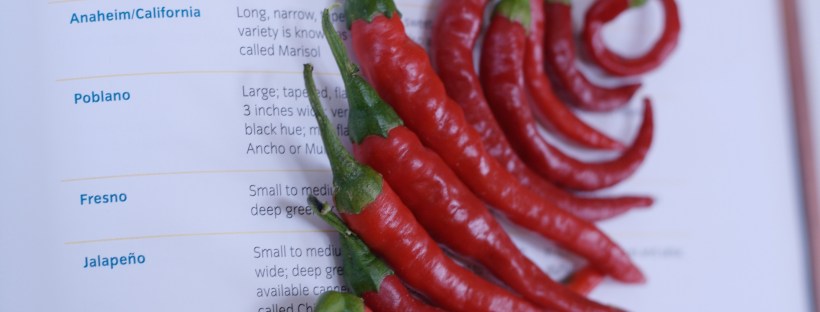
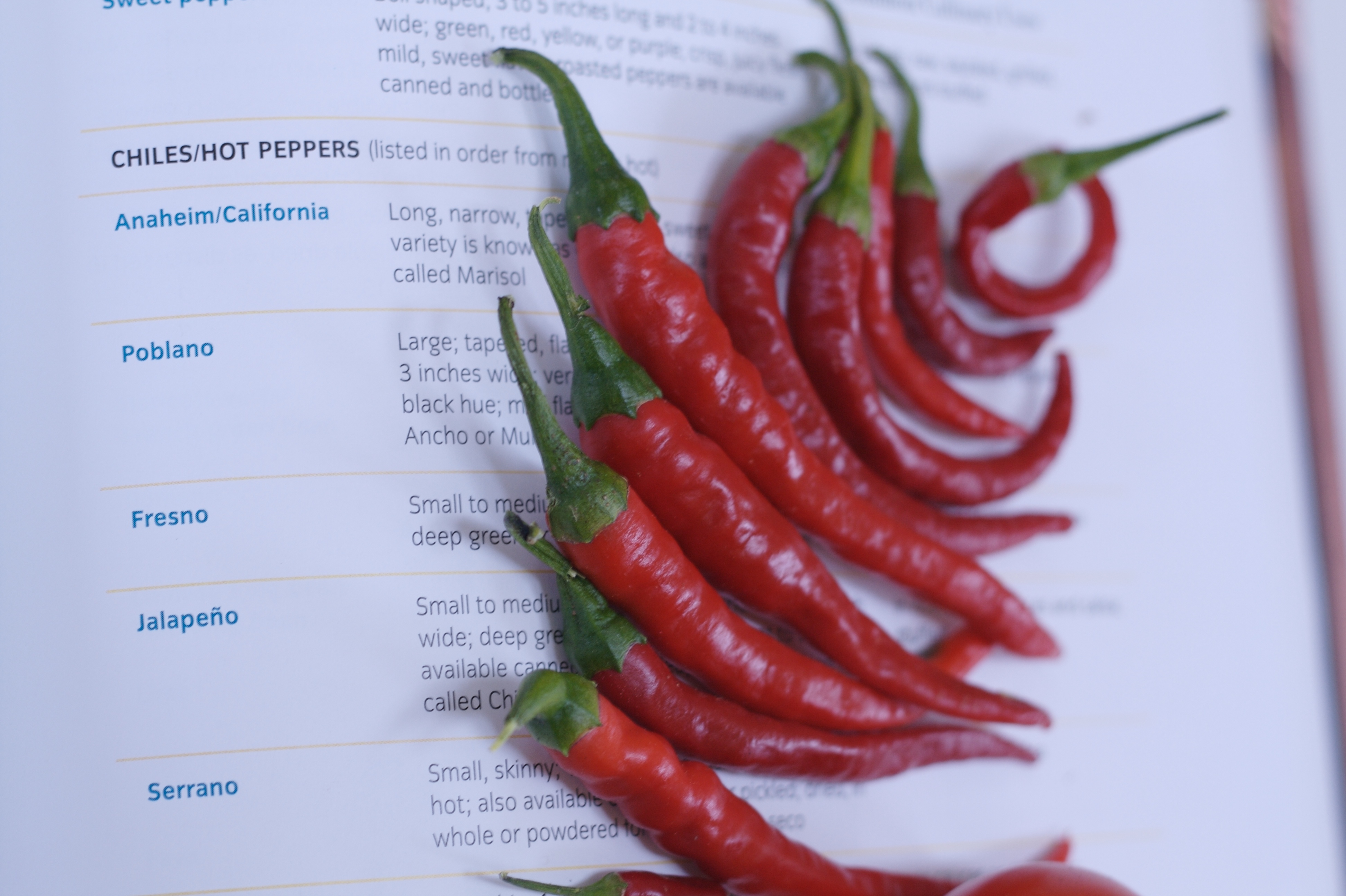
1796297804_1d9622673e_oDaisy McGhee lives in Ohio and at 100 years old remains a keen gardener, growing garlic, potatoes, parsley, onions – and jalapeno peppers. It’s to these that she credits her long life, according to local paper the Star Beacon.

Born in Cleveland, Daisy skipped school because her mother couldn’t afford the textbooks and started work as a maid. She married twice but lost both of her husbands, the second in 1977. She has one son – who she lives next door to – and four grandchildren, five great-grandchildren and three great-great-grandchildren. A rich life then – but surely her fondness for chilli peppers isn’t responsible for the length of it?

Plausibility rating: 6 out of 10. Don’t be so sure. The fiery taste of chilli peppers comes from capsaicin, which is also found in cayenne pepper. Its strength is measured on the Scoville scale – pure capsaicin scores 16 million on the scale and the hottest pepper – the alarmingly named Carolina Reaper – scores around two million units. Daisy’s jalapenos are much, much milder – perhaps 20,000 units at most- but enough to pack a bit of a punch.

Capsaicin doesn’t just give peppers their taste though. It has well-established pain relief properties and is used to treat conditions such as arthritis. It may also aid longevity: one study – admittedly on mice – suggests that the pain-relieving qualities of capsaicin can also extend lifespan by 14 percent. A more recent study points to benefits for humans too. The study used extensive questionnaire data on half a million Chinese and found that those who ate spicy food once or twice a week had a 10 percent reduced chance of death (eating it daily further increased the health benefit but only marginally). NHS Choices, which takes pride in sober analysis of sometimes hysterical health news, gave this one a cautious thumbs up, saying it ‘adds to emerging evidence that capsaicin in chilli pepper may have a positive effect’ on health.

How appropriate then that Daisy celebrates her birthday on October 12th, the day that Columbus landed in the Americas and – among many other things – introduced Europe to the chilli pepper.

Secret no.26 Luck

11423356086_6ee79a969b_oWhen Frederick Crosby turned 100 in Thornlie, Australia, he was clear what it had got him to that age: ‘A bit of luck. There are so many things that can go wrong and they didn’t go wrong,’ he told his local newspaper.

On the other side of the world, Canadian Emily Sharpe turned 100 a couple of weeks later and expressed a similar sentiment when asked for the secret of her long life. ‘Damn luck’ she said. ‘I smoked from the time I was 14 until I was 84. That’s not fair! Some other poor bloke smoked just a a few years and he can’t breathe.’

And in Denver, Paul Marcus agrees. ‘You got to be god damned lucky for 100 years.’

So, is luck really the key to reaching 100?

Plausibility rating: 8 out of 10. Well, it’s certainly one of the keys, though it’s not quite so simple as being ‘born lucky’.

First, we need to extend the concept of ‘luck’ to include ‘chance’. There are bonfires worth of literature about the differences between these two concepts but this paper suggests that, broadly, being ‘lucky’ or ‘unlucky’ is about whether or not we benefit from the circumstances – the chance events – that come our way randomly. A lucky person seems to be affected by ‘positive’ chance events more often; an unlucky one by ‘negative’ chance events.

And our centenarians certainly do seem to have benefited from chance events, in at least three areas: their genetic inheritance; the environment in which the grew up and their exposure to – or avoidance of – some of the random events that come our way.

Genetics. Paul Marcus wouldn’t take much persuading on this one – in fact his first answer on longevity is ‘You gotta have good genes’. We’ll cover genetics in more detail in a future post but it’s fairly clear that some people are born with genes that make them more likely to live longer. One of the more interesting aspects of this is raised, albeit unwittingly, by Emily when she says that she smoked most of her life and yet has reached 100. Though smokers tend not to make it to 100 (again, a subject for a future post), some do. The world’s oldest recorded person, Frenchwoman Jeanne Calment, was a lifelong smoker until her death in 1997 at 122. It seems likely that Emily and Jeanne share a particular set of genes, which researchers suggest, allow some people to smoke but avoid the consequences to their health. This group has the same levels of inflammation, blood pressure and immune system functioning as non-smokers but it doesn’t affect them in the same way. Chance indeed.

Environment. Genetic inheritance is only the first of life’s lotteries. Where you are born and the environment you grow up in are also critical to living to 100. The so-call  ‘Preston Curve‘ demonstrates that if you are born in a relatively prosperous Western country you have a far greater chance of reaching your 100th birthday than if you are born in a poor one. A decent health service, good levels of public hygiene, adequate nutrition and housing: all of these are tip the scales significantly in your favour.

Exposure to random events. We die not just from illness and disease but from what happens around us. Every year in the UK, 18,000 people die from accidents and other external causes. Most of these are in traffic accidents and falls, but some unlucky people are poisoned, electrocuted and, of course, murdered. A few even meet their end from hornets, lightning and rat bites.  There were, of course, a number of major external events that helped shape the fortunes of the generation that is currently reaching 100: they lived (and died) through two major world war, many of them fighting in at least one of them. Both these wars had a major effect on life expectancy. In the US, for example, male life expectancy dropped in 1917 to a startling 37 from a pre-war peak of 52. In the second world war, male life expectancy in the UK fell sharply in 1940 and 1941 and in 1943 in the US (not fully recovering until 1949).

So chance, luck has clearly been a factor for our centenarians. They didn’t die of a range of diseases and they weren’t stung to death by hornets or killed in the second world war.

Yet, as the psychologist Richard Wiseman observes, people are not simply passive; they respond to  the events and circumstances they face. Being ‘lucky’ in his view is not just about what comes for way but how you make it work to your advantage (or at least mitigate its consequences).

Take the impact of the Vietnam War on the lives of young male Americans.  Surely there is no clearer example of the importance of luck on longevity than the 1969 Vietnam Selective Service Lottery, which selected the people to be drafted to fight in Vietnam? In that lottery, the 366 birth days in a year were drawn out at random, with the first dates drawn the ones who would be drafted. (You can find out what would have happened to you here – my birthday, 15th May, came out number 130 so it was more likely than not that I would have been called up).

However, while this makes it look as though being sent to Vietnam was pure chance, in practice it was not. This article explores the various strategies you could employ to avoid being drafted into the US infantry, from where most of the casualties came. You could, for example, volunteer for the airforce or navy (whose casualty rate was very low) rather than wait and run the risk of being drafted. Or you could do a deal and volunteer for a range of hard-to-recruit positions that ran no risk of combat.  And if you’d shaped your life by getting a college degree, you could almost always use this to find a safe administrative role, well away from the combat zone. As a result, of the 8.7m Americans who served in the Military, only a third went to Vietnam and, of these, only 12 percent were in combat and less than two percent were killed. So the lottery didn’t have to determine your fate.

And there is one final way in which chance is becoming less important in reaching 100. In 1932, the chances of living to 100 in the UK was around 1 in 20 for women and one in 20 for men. To get there you had to have an awful lot of things going for you. But, with advances in medicine and public health, today’s children have  a 1 in 3 chance of reaching 100.

So, in that sense, today’s children are luckier than their grandparents.

Secret no.25 Sweet potato

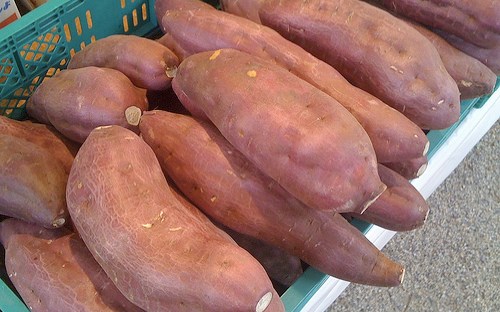
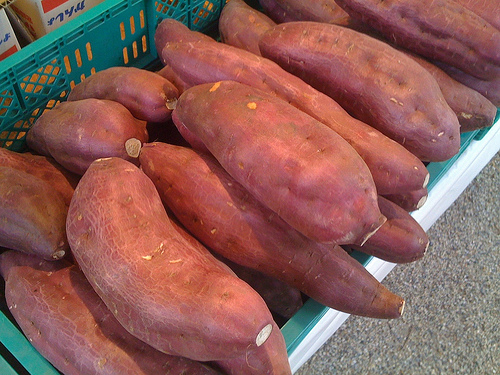
4242731514_9753fcb60aWhat does Jamie Oliver have in common with a 111-year-old Lessie Brown from Cleveland, Ohio? They both believe that eating sweet potatoes will help you live to 100. Jamie has fame on his side and a new cookery programme on Channel 4, promoting the health benefits of 14 ‘hero’ ingredients including the sweet potato.

But it’s Lessie who has the wisdom of experience, having been born in Georgia in 1904, over 70 years before Jamie. Georgia produces a lot of sweet potatoes (Ocilla, Georgia even hosts an annual Sweet Potato Festival) and Lessie would have gone through quite a few before she moved to Cleveland in 1922.

There she married, going on to have five children, 24 grandchildren, 44 great-grandchildren and 26 great-great-grandchildren. Her daughter, Bernie Wilson, says her mum used to love sweet potatoes and passed on the advice to others: “She even told a lot of people that would eat sweet potatoes. They thought that would give them longer lives too.”

But could it?

Plausibility rating: 7 out of 10. If you’re only going to eat one vegetable, you could do a lot worse than the sweet potato. Not to be confused with a yam (duels have been fought over less), a single medium-sized sweet potato has around double the recommended daily allowance of Vitamin A and is rich in Vitamin C, iron and thiamine.

Sweet potatoes are also a great source of the antioxidant beta-carotene which is associated with a range of benefits, including your immune system, protecting against free radicals, and perhaps lowering your risk of heart disease and cancer.

And it’s not just Georgia sweet potatoes that offer the benefits. Jamie’s programme focuses on the inhabitants of the Okinawa islands in Japan, who eat a purple-fleshed variety of the sweet potato as a staple part of their diet. Okinawans famously live a very long, very healthy life. And a well documented one: since 1975, the Okinawa Centenarian Study has recorded how its centenarians ‘age slowly’, delaying or sometimes even escaping the chronic diseases of aging including dementia, cardiovascular disease (coronary heart disease and stroke) and cancer.

Overall, this is about as credible as evidence gets (Jamie would perhaps call it ‘pukka’). It is not, of course, all down to sweet potatoes. The study suggests that genes combine with  lifestyle factors to produce the remarkable longevity of the Okinawans. One of the those lifestyle factors is how much you eat, which we considered briefly here, but what you eat is also critical, and high fruit and vegetable consumption is key.

So Lessie would probably have been giving good advice when she told her neighbours to eat sweet potato.

Secret no.24 Whisky

9932066903_a466fa3984What is it with whisky? Lots of our centenarians have thought that a shot or two of Scotch was the reason they’ve made it to 100.

Recently we recorded the death of Ruth Newman, one of the last survivors of the 1903 San Francisco earthquake, who said that her longevity secret was a Scotch and water every night. We’ve also recorded the death at 111 of Nazar Singh, who cited good food, a loving family – and again a tot of whisky every night. And Agnes Fenton upped the alcohol stakes a little by saying her secret was three beers and a whisky chaser.

The most recent advocate is 109 year old Worcestershire woman Grace Jones*, who turned 109 this month (September) and has had a small glass of whisky every night for the last 57 years. Grace has lived through the reigns of five British monarchs, starting with Queen Victoria’s heir, Edward VII, and 22 British Prime Ministers, beginning with Henry Campbell-Bannerman. She’s led a bit of a nomadic life, moving house 27 times with her husband, Leonard but ‘Amazing Grace’, as she is known to her friends, is certainly consistent about her whisky – she told her local newspaper last year, on her 108th birthday: “I never miss it. I don’t drink and all I have is the whisky at night. Whisky is very good for you. He (her doctor) said keep up with the whisky Grace, it’s good for your heart.”

So is it? Or does whisky have some other quality that could possibly have helped Grace and some many other centenarians clock up their 100 years?

*Oddly, Grace is not the first Englishwoman called Grace Jones to hit 100. The ‘other’ Grace Jones lived in south-east London and, until her death in 2013 at the age of 113, was the last British person alive to be born in the 19th century.

Plausibility rating: 6 out of 10. We’ve explored other types of alcohol before and come to the conclusion that the case for it isn’t that strong. True, there is research evidence that a small amount of alcohol consumption is associated with longer life. However that evidence is disputed and once we go beyond a moderate intake, alcohol is associated with a whole lot of harm.

So why would a ‘wee dram’ be any better? Some people do use it as a nighttime sedative – the classic nightcap – so could that somehow help improve longevity? Sadly no. Alcohol may help you get off to sleep but the quality of that sleep is likely to be poorer. It does seem possible that whisky in the form of a hot toddy might help you with the symptoms of the common cold but surely that’s not enough to extend a lifespan.

However there are one or two qualities of whisky that might just put it above your average alcoholic drink and which perhaps justify our plausibility rating. For one thing, it’s relatively low in calories – about 75 in a small measure – about the same as a glass of dry white wine.  More importantly though it’s full of ellagic acid, gallic acid and lyoniresinol – all of which improve the antioxidant properties of your blood (wonderfully, the older the Scotch, the bigger the effect).  It even seems to work in practice – an admittedly small (in truth, tiny) piece of research involving the comparison of red wine, mature Scotch and a younger spirit found the Scotch had the greatest antioxidant effect. The research concludes that the findings are compatible with suggestions that moderate intake ‘decreases the risk of coronary heart disease’.

Which was exactly what Grace’s doctor said, wasn’t it? So we’re giving Grace (and her doctor), Ruth, Nazar, Agnes and Henry the benefit of the doubt and giving whisky a creditable six out of 10 as a longevity secret. Just remember to choose the very best, longest matured, single malt Scotch if you really want to live a long time.

photo credit: Various Whiskies via photopin (license)